

There are a number of people purporting to be selling “Wasabi” seeds over the Internet at a price in the region of $2.00 per 100 plus postage.
Most of these offers are from China.
MOST IF NOT ALL ARE FAKE.

Here is a photo of the “Wasabi seeds” that we purchased.
As you can see there is a mixture of seeds in the pack and they are not moist.
This already raises a red flag.
The seeds are too small and the wrong colour.
Wasabi seeds are normally in the region of 5-8mm in diameter, black or dark brown in colour and have slight wrinkling in the seed coating.
All the ones that we have purchased and tried out are not Wasabi seeds, but appear to be mustard seeds or similar.
There were a few that we have no idea what they are, but they are definitely NOT Wasabi.
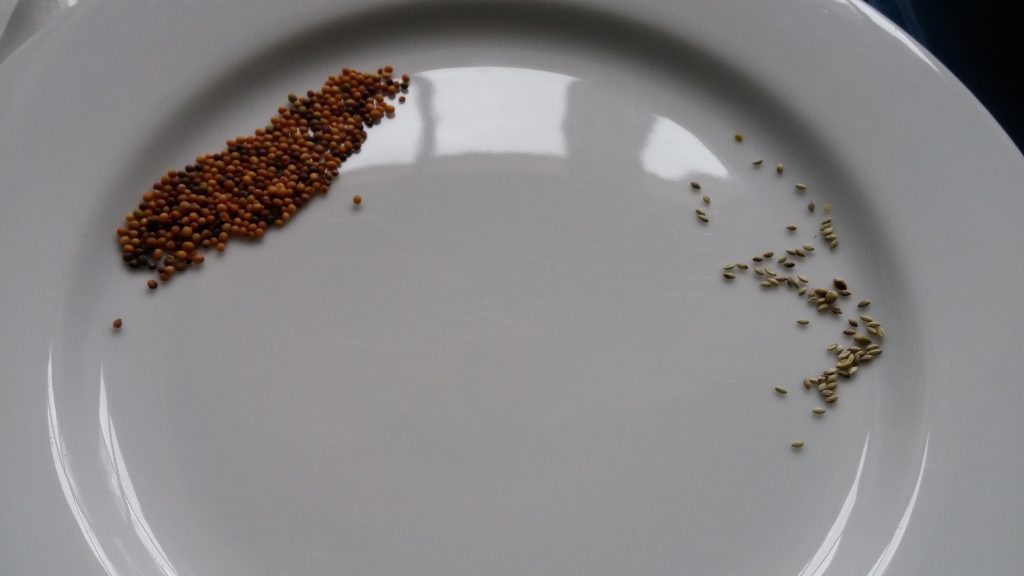
When we sorted out the seeds this is what we got.
The majority were mustard seed and we have no idea what the other seeds were.
What they did grow was a very tall plant that our people in Malaysia said was regarded as a weed here.
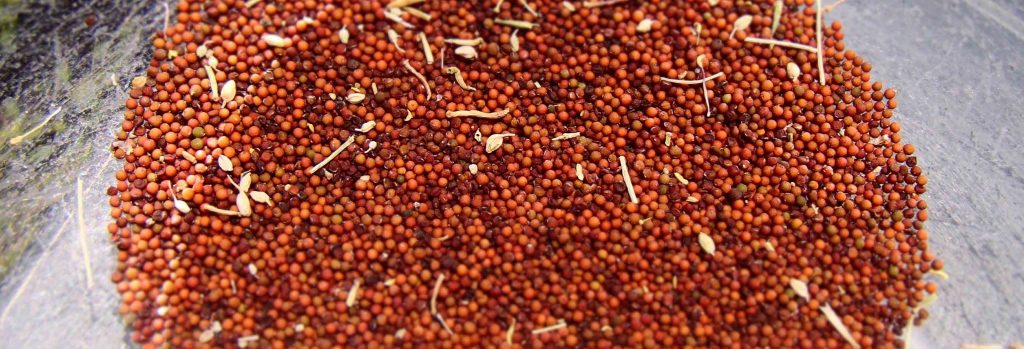
Here is a picture of mustard seed that have just been harvested before cleaning.
Don’t they look remarkably like the “Wasabi” seeds we received.
Our experience since since 1990 is that Wasabi Seeds have a very low strike rate (<2%) and it is not worth the effort as the resulting plants are pitiful.
Wasabi seeds need to be kept moist and cool (if not cold) until they sprout.
Sending these seeds through the mail and taking anywhere up to 3 weeks to arrive is a guarantee that if they were Wasabi seeds then they would be non-viable.
Our recommendation is not to purchase any Wasabi seeds from anyone (even if they are local), but to purchase Wasabi plant starts that already have roots and at least two leaves on.
Even with Wasabi starts they need to be kept cool and nurtured carefully until they mature and you can harvest them.