

S&B Wasabi Paste Review
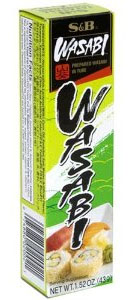
I suppose that it is appropriate that we start this series of “wasabi” products reviews with a product that can be found in most food stores around the world.
If a poll was held then most people would say that this product was the “wasabi” standard. The problem with that is that this product contains absolutely NO wasabi whatsoever. Or at least it does not contain any part of the True Wasabi plant – Wasabia japonica.
The ingredients list for this product is as follows; Horseradish, Lactose (Milk), Corn Oil, Sorbitol, Salt, Water, Artificial Flavor, Turmeric, Xanthan Gum, Citric Acid, Artificial Color (FD&C Yellow #5, FD&C Blue #1).
Comments
No matter where you go, there always seems to be a tube of this stuff available. Not only for personal use, but also within restaurants and other eating places that do not use “wasabi” in large enough quantities to justify buying a couple of pounds of “wasabi” powder.
In this product we have a mixture of European horseradish, which has similar flavours to Wasabia japonica, and a whole range of other ingredients – most of which are not very good for you.
Lactose and Corn Oil adds calories, Sorbitol is a chemical preservative that adds sugar and a gritty texture, which makes this product an unpleasant eating experience. Salt gets my blood pressure up, which doesn’t improve my heart condition. Artificial flavour could be anything from mustard oil to caustic soda :(. Tumeric is a colouring agent with a flavour component. Xanthan Gum sticks the whole mess together so that it doesn’t separate out in the tube. Citric Acid is another preservative that also keeps the colour looking fresh and not allow it to brown off on the store shelf.
The Artificial colours need a whole section by themselves. they are only there to give the green colour to the product. They have no other function.
FD&C Yellow No. 5
The real name for this colouring is Tartrazine. Tartrazine is a coal-tar derivative that is used to colour foods, cosmetics, and other products. It is literally industrial waste.
Tartrazine is also reputed to be a catalyst in hyperactivity/ADD, other behavioral problems, asthma, migraines, and lupus! It is alleged to cause allergies; thyroid tumors, lymphocytic lymphomas, chromosomal damage, and is banned in Norway.
Yellow #5 has been shown to cause cancer not only when ingested, but also when applied to the skin. Some artificial coal tar colours contain heavy metal impurities, including arsenic and lead, which are carcinogenic.
So why would you want to eat anything containing this ingredient?
FD&C Blue No. 1
This is another coal-tar derivative that is used to colour foods, cosmetics, and other products. More industrial waste!
Blue #1 has the same problems as Yellow #5 with the added complication of causing chromosomal damage. It is banned in France and Finland.
So why would you eat something that shortens your life?
Conclusion
Marketing has managed to drive this product to the top of the pile to where the majority of people believe this product is wasabi. This is a myth that has been going on since the end of World War 2, and even today is being peddled to the next generation. Surely in this enlightened era when we are becoming more concerned about what we put into our bodies, we really need to look at whether we allow this sham to continue. There are a number of products out there that are made from True Wasabia japonica, and are not always much dearer than the “faux” wasabi. Over a period of time we intend to review and comment on any and all products that we come across that either claim to be wasabi or to contain wasabi. I think it will an interesting trip through these products.
Rating
Because this product does not contain any True Wasabia japonica, is gritty and in my opinion nasty in the mouth, I give this a rating of 0/10 and recommend that you look for a better product to spend your money on.
Have a look at your Recommended Product List to see some products that deserve your support.
Join the “Stop Coloured Horseradish being called Wasabi!” Campaign and help make the manufacturers of “faux” wasabi label their products truthfully as coloured horseradish.